A little play can open the door to big discoveries. Explore how our games are designed to encourage curiosity, practice new skills, and make learning feel like an adventure.
Play gives children a reason to try an idea and see what happens. We design around opportunities to practice, rather than promises of a particular learning result.
Explore ideas through hands-on activities.
Notice patterns and make connections.
Practice problem-solving and try a new strategy.
Learn from mistakes with room to try again.
Express creativity through choices and free play.
Try a challenge with optional help.
What Children Can Practice
Original games across eight themes. The descriptions below explain what children actually do, the ideas they can practice, and each game’s limits.
Ready to play
Math & Logic
Number sense, mathematical relationships, logical reasoning, and problem-solving.
What children do
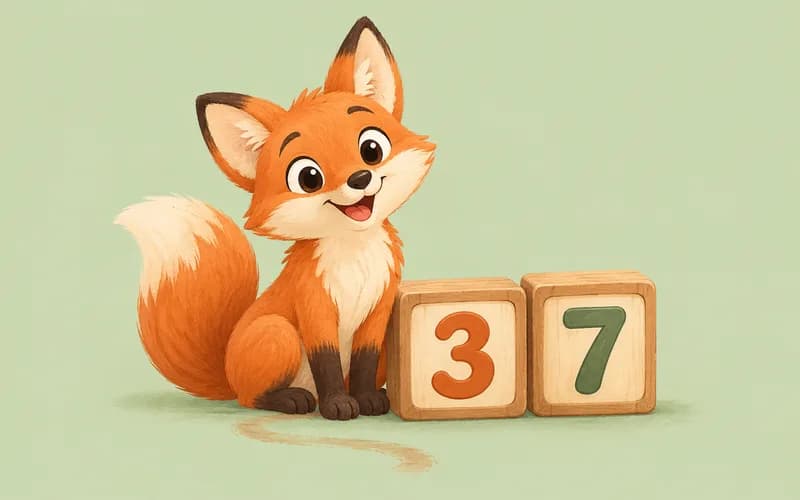
Parcel Pals adds 24 levels and 72 orders using tens-and-ones exchanges. Picnic Pals offers 24 counting, sharing, comparison and matching levels. In Fox Trail, children match equal quantities or combine two numbers to clear the road home. The campaign offers 50 adventures in Make 10, Make 15, and Make 20, plus separate practice.
Why we designed it this way
Different pairs can make the same total. Start with picture quantities or familiar Make 10 combinations; try Make 15 or Make 20 when the underlying addition is comfortable.
Try askingCan you find another way to make the same number?
Color recognition, visual discrimination, sorting, and patterns. Shape recognition, rotations, reflections, and spatial composition.
What children do
Rainbow Garden has 40 challenges: match colors, find flowers among distractors, complete repeating colors, and sort by color plus petal pattern. Shadow Buddies adds 40 shadow puzzles and an editable paper theater.
Why we designed it this way
Comparing visible features makes a rule concrete. Garden rules and puppet outlines offer different ways to compare colors, shapes, and spatial relationships.
Try askingWhat comes next in this pattern? How do you know?
Beat awareness, listening, rhythm sequencing, and auditory-motor coordination.
What children do
Animal Beat Parade offers 40 fixed rhythm levels, Follow the Beat, separate listening and repeating phases, and four-instrument Free Play. Cloud Loom adds 40 tap, hold and rest patterns, plus an editable Free Weave studio. Visual Practice is available without sound.
Why we designed it this way
Children can notice pauses and try short sequences again. Timed rhythm scores describe taps in the game, not intelligence, academic achievement, or musical ability.
Letter knowledge, spelling, vocabulary, and understanding short clues. Sound awareness, phonics, and extended reading comprehension are distinct broader goals.
What children do
Word Workshop has 36 levels using 30 English words, including six two-object projects. Choose partial-letter help, independent spelling, or a reading clue. Make an object, pick it up, and use it to change the scene.
Why we designed it this way
Connecting a word to its use gives spelling a purpose. Phonological awareness means noticing speech sounds; phonics connects sounds to written letters. Vocabulary concerns meaning, while comprehension concerns understanding text. This game is not a systematic phonics course or reading assessment.
Try askingWhat could we make to help this character?
Observation, asking questions, comparing evidence, and making predictions.
What children do
Sprout Lab offers 8 bean-plant experiments, a free greenhouse, and a local discovery book. Set water and light, inspect plant parts, and compare simulated changes.
Why we designed it this way
Children predict, compare visible evidence, and explore fair tests. This simplified teaching simulation is not real plant-care advice; pilot task observations do not establish scientific ability.
Creative expression and experimenting with paper, colors, patterns, and arrangements.
What children do
Little Art Studio offers 18 invitations to create friends, homes, and little worlds, plus open Free Create and a local gallery. Clay Critters adds twelve digital clay invitations, five shaping tools, and editable friends to try on little stages.
Why we designed it this way
Open-ended making leaves room for personal choices and different outcomes, without one required picture or a creativity score.
Sequencing, cause and effect, debugging, and practical problem-solving.
What children do
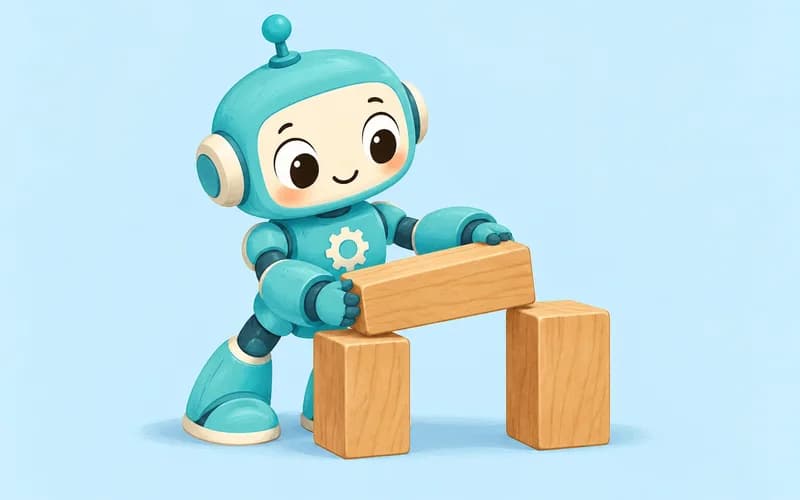
Robo Builders offers 40 story tasks, 4 short guided activities and a small Free Workshop. Arrange robot instructions to deliver planks and connect a toy town.
Why we designed it this way
Test a visible plan, watch the result, and change an instruction. Repeats and conditions are practice topics; this is not a complete coding course.
Expressing needs, listening to different perspectives, asking for help, and everyday choices.
What children do
Feelings Town offers 12 Picnic Day stories, three support modes, a sticker book, and free picnic arranging. Multiple respectful routes remain open.
Why we designed it this way
Characters state their own needs. Asking for help, refusing, or resting are valid choices. Story observations describe game actions, not emotional ability or mental health.
Children set water and light, advance simulated time, inspect roots and leaves, and save what actually happened. Little Observers plant and find roots; Explorers compare one change; Detectives repair a fair test and use multiple features; Researchers examine simulated samples and limits. Every path remains open.
This finite model represents a bean seed and seedling under fixed background conditions. It is not a plant-care calculator. Seeds use stored reserves; germination and later growth are different. Water plans are relative, not measured watering advice. Appearance alone cannot diagnose a cause.
Science inquiry is a pilot under Solving Puzzles. Predictions, speed, observation clicks, speech and free exploration are never ability scores. The eight tasks do not provide enough independent items per goal for a formal challenge. Repeating a sample does not add new evidence. No long-term assessment record is written; Learning Journey’s existing opt-in, export and deletion controls remain separate.
Ask: What changed? What stayed the same? Which leaf or stem detail supports your idea? What could we test next? Surprising results are welcome.
Shadow Buddies
These are game-task observations, not a standardized cognitive assessment or diagnosis. Draft OKG-LAS activities have no ability score or numerical trend. Shared browsers may include more than one player.
These are observations of game activities, not a creativity, intelligence, psychological, or cognitive assessment.
Off by default. Artwork and brief activity notes stay in this tab’s session. A grown-up can enable longer-term storage on this browser. Nothing is uploaded.
Age is a recommendation, not a gate. Starting knowledge, interests, reading confidence, and comfort with the controls matter, too. Our collection offers starting activities across ages 3–12, with different ranges for each game. It is not a complete curriculum for any age.
Ages 3–5 | Little Explorers
Look for large, clear objects, one-step rules, visual examples, and repeatable matching or sorting. Rainbow Garden and picture trails offer gentle starts with adult help. Sound is optional. Word Workshop starts at age 5 and may need reading support.
Ages 6–8 | Growing Thinkers
Explore tasks with several steps: use familiar number combinations, notice repeating patterns, build words and use the resulting objects, or listen before repeating a rhythm. Optional help lets children try more independently when ready.
Ages 9–12 | Big Discoverers
Try repeats, conditions, debugging, and multi-scene plans in Robo Builders; fair tests and simulated evidence in Sprout Lab; or collage, layers, drawing, and animation in Little Art Studio. Fox Trail is suggested through age 10, and Word Workshop and Feelings Town through age 9. Every game remains open.
How We Design Our Games
01
Play First, Learn Along the Way
The idea belongs inside the action: a number pair opens a road, and a word creates something a character needs.
02
Clear Goals, Meaningful Challenges
Visible goals and examples explain the next action. Authored levels introduce different combinations, rules, or sequences; they are not assessments of a child.
03
Mistakes Are Part of Learning
Puzzle games offer hints and another try. Rhythm results give feedback on the current taps, with replay available and no early failure.
04
Progress at Your Own Pace
Puzzles have no mandatory countdown. Animal Beat Parade and Cloud Loom follow timed beats, with pause, replay, generous timing, and free creation. Choose the experience that feels comfortable.
05
Designed for Little Hands
Large controls, touch and keyboard options, visible feedback, reduced-motion support, and sound controls are part of the design. Physical-device and assistive-technology review is still ongoing.
06
Room to Explore Again
Return to familiar levels, try other number pairs, use separate practice, or make sounds in Free Play. Available choices differ by game.
Inspired by How Children Learn
Our design thinking is inspired by research on child development and learning, including playful exploration and adult guidance. The resources below concern teaching practices and developmental frameworks; their evidence does not establish that this website or its games improve learning outcomes.
NAEYC, IES, and CASEL have not endorsed or certified this website. We have not conducted educational or clinical trials of these games.
Make the Most of Playtime
Let children choose games that spark their curiosity.
Ask an open-ended question before offering an answer.
Celebrate effort, a new strategy, or an interesting discovery.
Connect a game idea to something in everyday life.
Take breaks and make room for movement and offline play.
Play together when possible; take turns explaining your thinking.
Keep the discovery going
Use what you already have. No special materials or purchases are needed.
Math & Logic
Split a handful of toy blocks into two groups. Find a different split with the same total.
Colors & Shapes
Find household objects in two colors and arrange a repeating pattern. Compare their shapes, too.
Music & Rhythm
Clap a short rhythm for each other to repeat. Take turns leading, and include a quiet pause.
Words & Reading
During shared reading, spot a familiar letter or word. Say the word together and talk about what it means.
Science & Nature
Look at a plant together. Notice a change over a few days and describe what you see.
Art & Creativity
Use paper and pencils you already have to invent a place for a story.
Coding & Engineering
Build a bridge with blocks or folded paper. Test it with a small toy and try one change.
Emotions & Life Skills
Talk about a character in a book. What might they need, and how could a friend help?
A Thoughtful Space for Young Players
Play without an account
The current games are free to play and have no sign-up, payments, required profiles, chat, or forms asking for names or birthdays. The application does not request camera, microphone, or location access.
Optional Learning Journey
Learning Journey is optional activity feedback. Local profiles use default labels, and saving results requires a separate opt-in. Parents can export or delete records separately from game progress. Results are kept for up to 56 days. Pilot feedback stays out of trends; draft and disabled activities have no formal score. No assessment data is uploaded. These controls do not establish legal compliance.
Progress stays in this browser
Games have separate local data. Feelings Town keeps progress and observations only in memory until a grown-up enables its device-saving setting. A shared browser means shared progress; it does not sync between devices. Storage restrictions can prevent saving. Age preferences are remembered only when you explicitly opt in. Homepage age filters are URL choices and are not saved to storage.
You can clear saved data
Fox Trail and age-preference controls are on the saved-data page; the Fox Trail control also removes retained earlier Math Connect records. Rainbow Garden, Word Workshop, Animal Beat Parade, Robo Builders, Sprout Lab, Little Art Studio, Feelings Town, Parcel Pals, and Cloud Loom have separate game/settings controls for their own local data. A game reset affects only that game’s documented keys.
Sound and outside services
There are no advertising or analytics integrations in the current application. Music and effects are synthesized locally. Word Workshop also plays licensed word recordings hosted on this site; optional spoken clues and garden hints use available local device voices. Research links lead to other organizations’ websites only when you follow them. An adult can choose to contact the listed Gmail address through their email application; game data is not attached automatically.
Site delivery and connection reports
The site uses Cloudflare as its content delivery network (CDN). Cloudflare receives connection information when pages load, and the site currently enables browser network-error reports to Cloudflare. These reports concern connection failures, not saved game progress or artwork. Cloudflare CDN is separate from the origin server; the origin hosting provider has not yet been verified.
Connection and security logs
The active request and security log fields, access practices and retention periods for Cloudflare and the origin server have not yet been verified. We cannot currently state that these logs are absent or give a confirmed deletion period. This notice will be updated as those details are confirmed.
Suggested ages: Fox Trail 3–10; Rainbow Garden 3–7; Animal Beat Parade 3–8; Word Workshop 5–9; Robo Builders 3–12; Sprout Lab 3–12; Little Art Studio 3–12; Feelings Town 3–9; Parcel Pals 5–9; Picnic Pals 3–7; Shadow Buddies 3–12; Cloud Loom 4–9; Letter Lighthouse 3–8; Pond Pals 3–12; Clay Critters 3–12; Gizmo Grove 3–12; Fraction Harbor 5–12; Lantern Parade 3–12; Beat Harbor 3–12. Feelings Town’s core experience is for ages 4–8. Robo Builders starts ages 3–4 with four guided activities; Sprout Lab and Little Art Studio offer different task or tool starting points through age 12. Recommendations never lock content.
Are the games free to play?
Yes. The current games have no payment, subscription, or in-game purchase system.
How do I choose the right game for my child?
Start with an interest, then check the suggested ages and starting knowledge. Try a simple level together. You can change the recommendation or use All Ages at any time.
Can children play at their own pace?
Number, color, and word puzzles have no mandatory countdown. Rhythm games use timed beats, with pause, replay, and an unscored Free Play option.
Do children need to create an account?
No. There are no accounts. Saving choices differ by game. Feelings Town starts in memory, Little Art Studio uses tab-session recovery, and Robo Builders requires opt-in; other games use their documented local saves. Nothing syncs between devices.
Can parents play together with their children?
Absolutely. Take turns, ask how a choice works, and let your child show you a new strategy.
Are these games a replacement for school lessons?
No. They are opportunities for play and practice alongside school learning, books, real-world experiences, and time together. They are not a curriculum or substitute for teaching. Optional pilot feedback describes specific game tasks, not general ability.
Guidance for educators working with children from birth through age 8. It emphasizes individual development, context, and meaningful play; it does not cover our entire 3–12 audience.
A practice guide for preschool, prekindergarten, and kindergarten educators. It addresses developmental progressions in number learning and other mathematical ideas. Evidence ratings vary by recommendation.
A K–3 teaching guide covering language, speech sounds and letters, decoding, and daily connected reading. It covers much more than Word Workshop’s 30 words and 36 levels; it is not an evaluation of our game.
A framework spanning self-awareness, self-management, social awareness, relationship skills, and responsible decision-making. It provides context for thinking about everyday choices, not a therapeutic claim or an evaluation of Feelings Town.
An early-childhood teaching guide addressing social-emotional learning, executive function, mathematics, language, and literacy. Its recommendations concern preschool preparation, not proof of benefits from our games.
Contact about privacy or local data
A parent or grown-up can email us with questions about the site or its local data controls.
Please describe the issue without sending a child’s name, birthday, school, photos, voice recordings, or exported activity records. Clicking the address opens your email application; it does not upload a game save.